Designing with Empathy: Valerie Trisnadi's Journey in Empowering Underrepresented Communities
In the sphere of digital design and illustration, the value of a well-crafted piece extends beyond its aesthetic appeal. This creative domain employs technology to construct visual narratives that have the power to inspire, influence, and foster connections. Modern-day design priorities have expanded to embrace purposeful and inclusive creativity. This shift in focus is a response to the industry's prominent role in shaping our daily experiences, from the apps that facilitate our tasks to the websites that inform our decisions. Such pervasive influence underscores the industry's capacity to instigate change across sectors and highlights its potential to address pressing social concerns.
Within the thriving ecosystem of the digital design industry, Valerie Trisnadi shines as an impactful force. As a digital designer and illustrator, her narrative seamlessly melds elements of pioneering design principles and social advocacy. Her origins in Indonesia, education in New York, and experiences traversing diverse cultures have shaped her into a designer with a distinct global perspective, evident in her multifaceted work. As an alumna of the renowned Parsons School of Design, Valerie combines her artistic sensibility, technical skill, and a deep sense of social responsibility to navigate and contribute meaningfully to the world of digital design and illustration.
Valerie's portfolio is a testament to her proficiency and passion. She has been acclaimed for her work on the Urban ASL project, a sticker app designed to promote American Sign Language in a fun and accessible way. Her creativity was further recognized when she was handpicked by Wix.com, a leading web development platform, to design a website for the non-profit organization HERoines. The platform's impressive 260% increase in member registrations three months post-launch attests to the impact of her thoughtful and strategic design approach.
Not content with personal achievement, Valerie Trisnadi has made it her mission to use her talents for the greater good. She designs with an empathetic lens, focusing on the needs of underrepresented communities and ensuring their narratives are told with authenticity, respect, and inclusivity. In her work with Urban ASL and HERoines, Valerie has proven that design can be a powerful tool for advocating for change, fostering understanding, and celebrating diversity.
In our exclusive interview with Valerie, she sheds light on her socially responsible design practices. With every project she undertakes, Valerie's ultimate goal is to ensure that her designs are not only aesthetically appealing but also resonate with and empower the intended user base. She highlights the importance of a human-centered approach and collaboration, stating that direct feedback from community members is invaluable in creating designs that truly meet their needs and align with their unique identities. Through her work, she sends a clear message to the design industry about the importance of empathy, cultural competence, and inclusivity, thereby setting a high bar for other designers to follow.
We’ve heard a lot about your amazing work, Valerie. Can you describe the moment or experience that first inspired you to dedicate your design skills to addressing the needs of underrepresented communities?
Sure! The defining moment that ignited my dedication to using design for the needs of underrepresented communities came about when I observed the daily challenges disabled individuals face in navigating an inaccessible world. These experiences left me with a profound sense of empathy and a resolution to apply my design skills to bridge this accessibility gap. From that point on, I pledged to use my design skills to champion accessibility, ensuring that the voices and needs of underrepresented communities are heard, understood, and celebrated through mindful and inclusive design solutions.
How do you approach the challenge of designing for diverse and often marginalized user bases, such as the Deaf community with your Urban ASL sticker app?
In addressing the challenge of designing for diverse and often marginalized user groups, I adhere to a human-centered and empathetic approach. This begins with thorough research and comprehension of the unique needs, preferences, and cultural contexts of the user base. To make sure Urban ASL resonated with its intended users, I proactively sought input and feedback from members of the Deaf community through interviews, focus groups, and collaboration. By grasping their needs, preferences, and cultural nuances, I am able to create designs that genuinely reflect their experiences.
Collaborating with experts, community leaders, and organizations committed to advocating for marginalized communities is equally crucial. Through promoting inclusive design practices, such as crafting accessible interfaces and eschewing stereotypes, my aim is to ensure that the design not only resonates with but also empowers the user base.
What were some of the unique design considerations when creating for underrepresented communities?
It's essential to approach the design process with cultural sensitivity and a comprehensive understanding of the community's values, beliefs, and lived experiences. This ensures that the designs resonate authentically and prevent perpetuating stereotypes or misrepresentations. Inclusivity is paramount, so my goal is to create designs accessible to a wide range of users, taking into account factors such as varying abilities, languages, and access to technology. I also prioritize representation by featuring diverse and positive portrayals of individuals within the community to encourage a sense of empowerment and visibility.
Collaboration and co-creation with community members are indispensable, as their perspectives and insights shape the design process, ensuring the final product caters to their specific needs and aligns with their unique identities. Ultimately, designing for underrepresented communities requires empathy, cultural competence, inclusivity, and a commitment to enhancing their voices through thoughtful and representative design solutions.
How do you ensure that the voices of these communities are represented in your design process and final products?
I am an advocate for a collaborative and inclusive approach. From the outset, I actively solicit input and feedback from community members, involving them as co-creators in the design process. This encompasses conducting user research, organizing focus groups, and facilitating interviews to glean deep insights into their experiences, needs, and aspirations. By directly involving community members, I can weave their perspectives, preferences, and cultural nuances into the design decisions.
Could you discuss a specific instance where feedback from an underrepresented community led to a meaningful change in your design process or output?
Indeed. In my Urban ASL project, I crafted various illustrations featuring individuals signing with differing hairstyles, clothing, and accessories. Among these illustrations, some depicted individuals with long, brightly colored nails. However, during a feedback session with the Deaf community, it was brought to my attention that signing ASL with noticeable or vibrant nails could be compared to signing "in cursive" or writing in a distinct font, potentially serving as a distraction and making it more challenging for users to comprehend the signs.
While there are individuals within the Deaf community who enjoy signing with long nails, I took this feedback seriously and made adjustments to the illustrations. Since the Urban ASL app's primary aim was to raise awareness about ASL, I wanted to ensure no aspect of the design impeded its educational value. The result was a more authentic and empowering app that genuinely celebrated ASL as a living language.
How have your design solutions positively impacted these communities, and do you have any measures of their effect?
My design solutions for HERoines, a non-profit organization in NYC, yielded substantial positive effects on their community. HERoines is a women-led NGO based in NYC dedicated to empowering women through events, books, and community engagement. They were keen to boost their membership sign-ups and enhance brand visibility. By studying brands that resonated with HERoines' target demographic and extracting their design languages, I successfully revamped HERoines' branding and website.
This involved reorganizing their site map, drafting new wireframes, and updating their outdated branding elements. The results were astounding, with HERoines witnessing an impressive 260% increase in member registrations within the first three months after launch. These quantifiable outcomes further underscored the power of design in magnifying a mission and engendering positive impact within underrepresented communities.
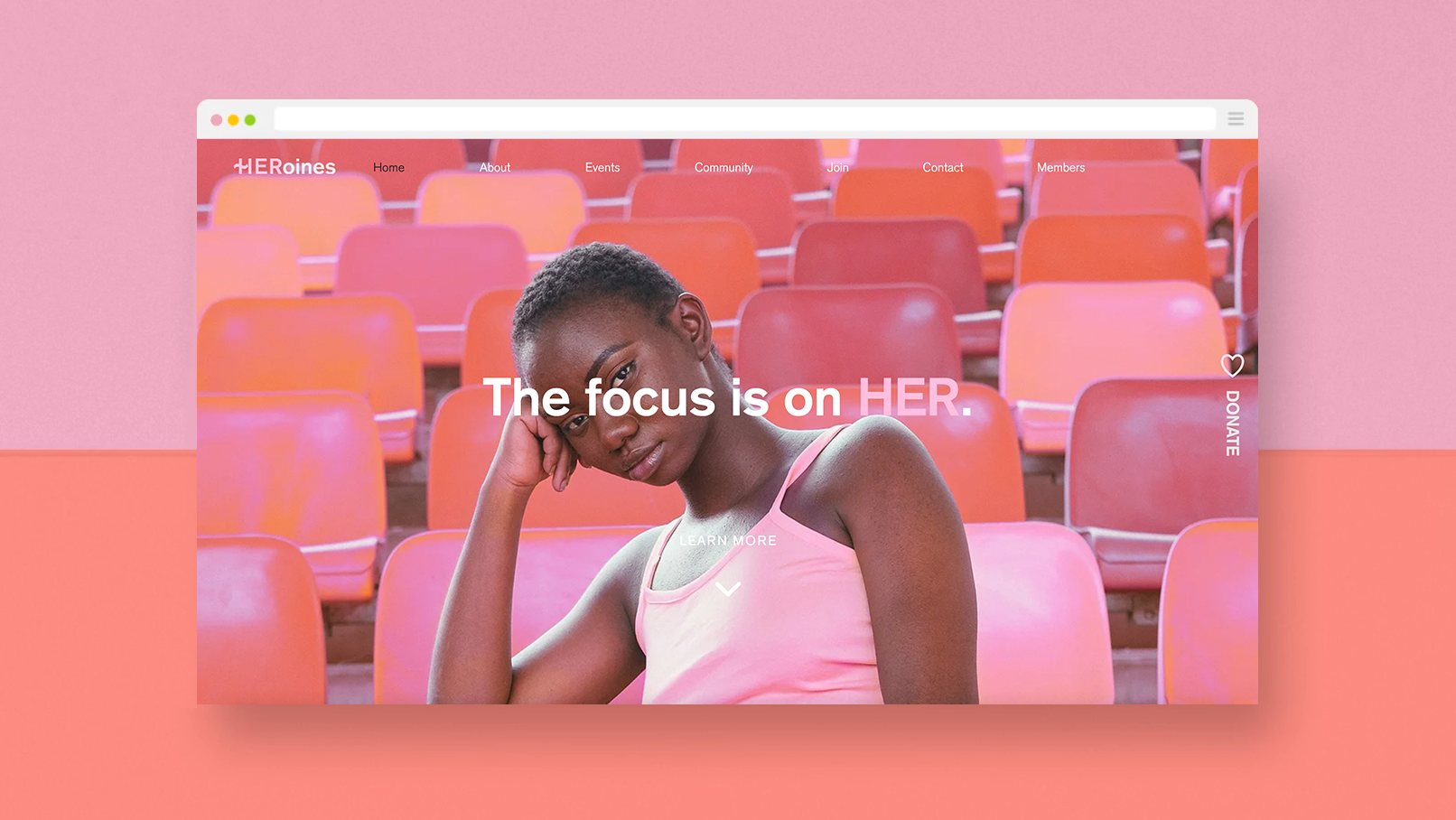
Trisnadi's website redesign for HERoines, a women-led NGO based in NYC that aims to empower women through events, books, and community involvement (2019).
What are some future projects or ideas you have in mind for continuing to support underrepresented communities through design?
One of the future projects I'm enthusiastic about involves harnessing design and technology to enhance navigation for blind individuals. I aspire to collaborate with researchers, technologists, and accessibility experts to devise innovative solutions that augment the way blind and vision-impaired individuals navigate their surroundings. This might entail the creation of smart navigation systems that utilize haptic feedback, audio cues, and augmented reality to supply real-time information about their environment, such as obstacles, landmarks, and points of interest.
Moreover, I'm eager to explore the potential of incorporating inclusive design principles into public spaces, such as tactile and auditory cues in urban environments, to ensure that individuals with visual impairments can navigate their surroundings with confidence. By merging technology, user-centered design, and collaboration, I aim to bridge the accessibility gap and enable people with disabilities to navigate the world independently and fluidly.
In what ways can the wider design industry do better in representing and designing for these often overlooked communities?
For progress, it's critical for the wider design industry to prioritize diversity and inclusivity in all aspects. Research and empathy should be at the core, with a commitment to comprehending the unique needs, challenges, and aspirations of these often overlooked communities. Collaboration with community members, organizations, and experts is key to gaining insights and co-creating solutions. Additionally, designers should consistently educate themselves on accessibility guidelines and best practices, striving to create designs that are not only aesthetically appealing but also inclusive and accessible.