Insights from the Ever-Evolving Acting Career of Leah Khambata

Actor and singer-songwriter Leah Khambata just might be one of the hardest working performers active today.
She has way too many credits for us to list them all here, so feel free to check out her official website for more details, but we would like to mention some of her career highlights, by way of introduction.
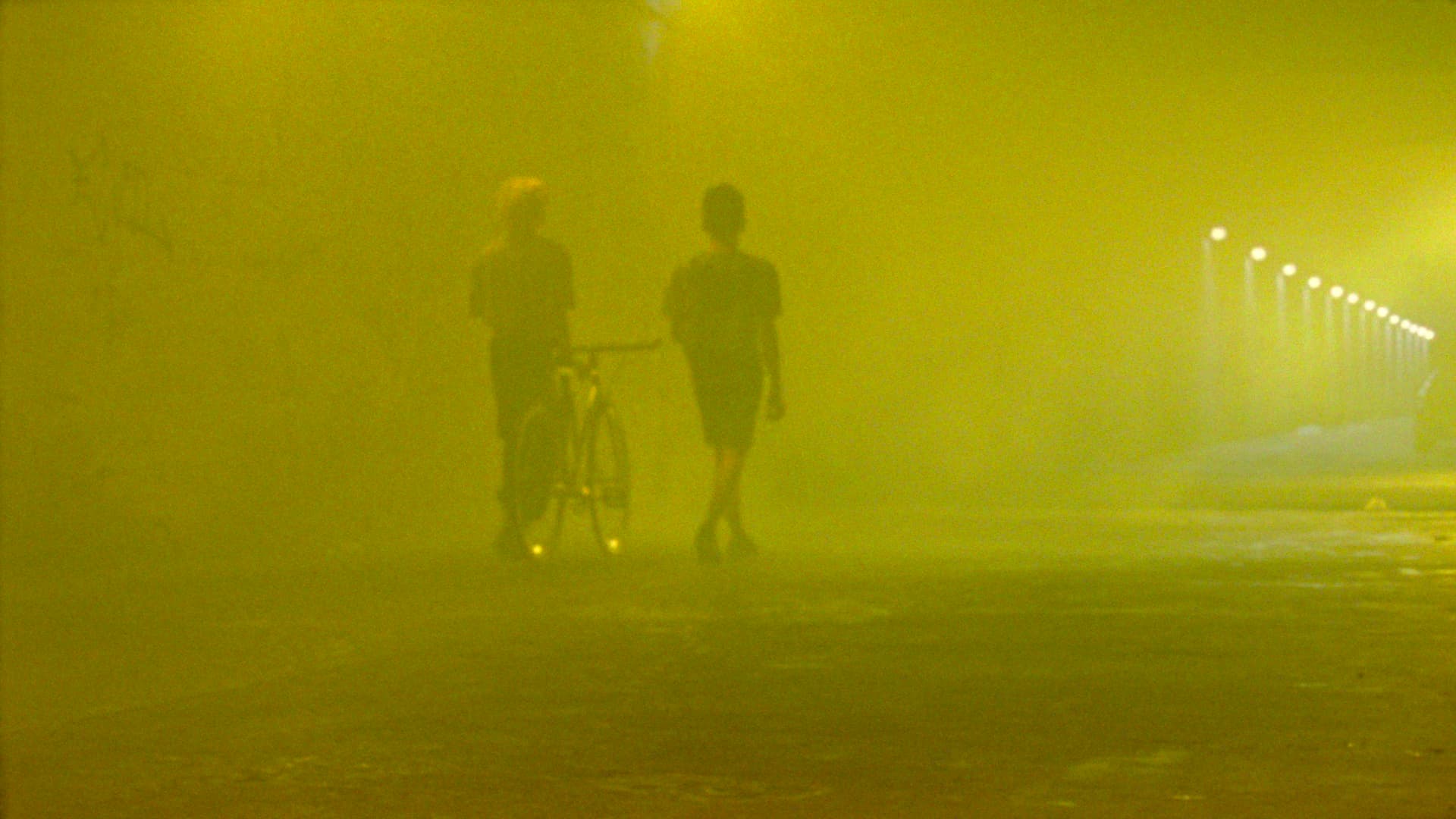
Khambata wrote, produced, and acted in a short film titled (t)here, which had its New York premiere at HBO's South Asian International Film Festival. The short follows a young Indian girl named Rhea living in the US but struggling to decide whether to stay in the country or return home to India. But then she suddenly forms an unlikely bond with an immigrant store manager.
Khambata has also starred in a number of other short films, as well as several Off-Broadway plays during her time in New York.
She also had a key role in the feature film Mithyam: The False Truth, released earlier this year, and which is currently shaking things up at the Cannes Film Market.
Another of Khambata's recent roles, one which we'll be talking about shortly, was in the Amazon Original series Guilty Minds.
And that's not even mentioning her stellar musical career.
We know that we have a lot of working actors and performers in our readership, so we thought it would be fun and maybe even enlightening to have a chat with Khambata about her view on acting, from prep to performance to collaboration, and that's just what we did. All you need to do to check it out is keep scrolling.
Let's kick things off with Guilty Minds.
Guilty Minds
Guilty Minds is an Amazon original legal drama series that has been praised for its accurate depictions of Indian courtrooms and its nuanced cast of characters.
Khambata joined the show in the role of Parineeta, and this was in fact her first role for an Amazon original series.
The shoot took place mid-pandemic, which of course added some complications for the cast and crew, as everyone's safety was always the top priority. Khambata joked that every time she took off her mask or put it back on, she tried her best not to smear her makeup.
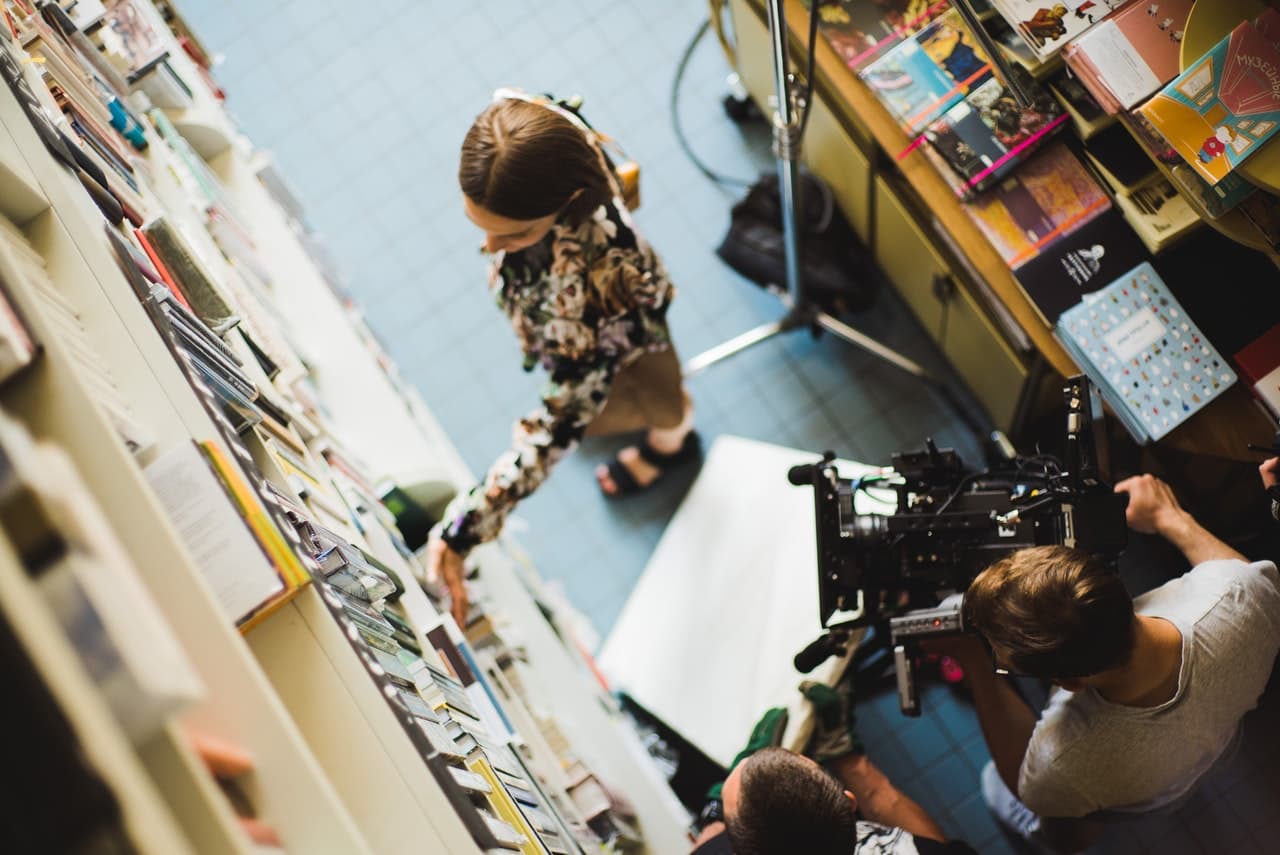
But the shoot was definitely a positive experience for Khambata overall, and she explained to us that she always felt comfortable paying attention to the details and doing her best every time the cameras started rolling.
"When you’re on a set and it’s a tight schedule, you can sometimes feel this need to rush through a scene in a subconscious 'let’s get it right the first take' kind of way, but director Shefali Bhushan really encouraged me to take my time with the little moments, and I think that really made a difference."
Tight schedules are common on lots of different productions, so it's nice to hear that Bhushan made a point of making everyone feel comfortable, not rushing things along, all while still meeting deadlines.
Theater roles vs. film/TV roles
Having acted extensively in both theatrical and film and television productions, Khambata is very well positioned to comment on some of the central similarities and differences between the prep and execution of these two types of performance.
Understanding these qualities is important not only for working actors out there in the readership but also for anyone planning to work closely with actors on a project. (We're looking at you, directing hopefuls.)
First and foremost, and probably more significant than all other differences, is the structure and chronology of performance.
Khambata:
"The major difference is that you perform chronologically in theater, and in film and TV you could be shooting the last scene first and the first scene last, so that definitely affects the preparation process, as well as the end performance."
We would argue that performing out-of-sequence is more challenging than performing in-sequence, at least for first-time screen actors.

Leah Khambata
However, at the same time, theater performances have the added challenge of taking place in real-time, with no opportunities for multiple takes.
But let's move on now to another key difference: when and where actors are able to work with their fellow castmates.
Working with castmates
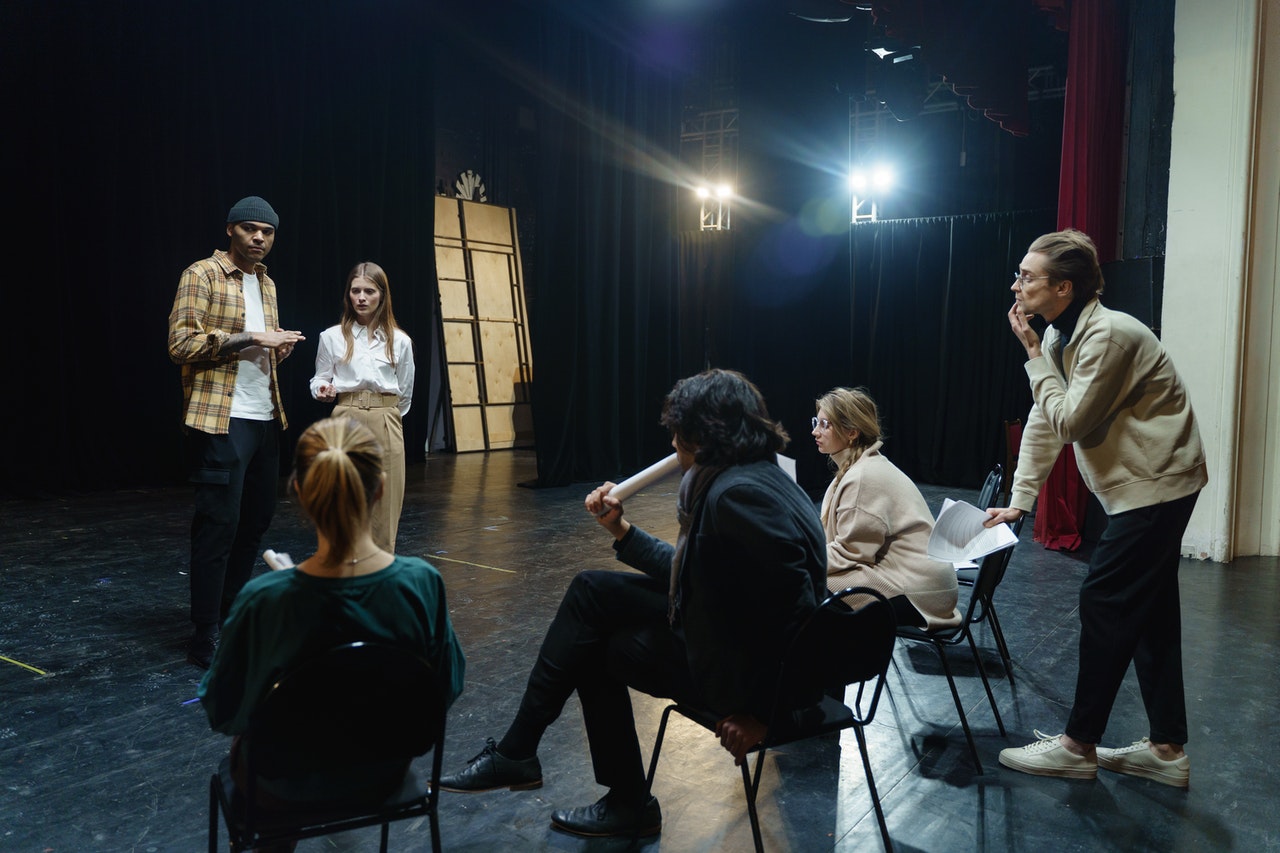
The pre-production phases of live theater shows and film/TV are drastically different, of course, and this difference also determines to what extent each actor gets to speak to and rehearse with other members of the cast.
Here's Khambata on the general flow of live theater prep:
"With theater, you have a lot of rehearsals with your castmates, so by the time you perform, you've already worked out a lot of the nuances and moments and have already created more of a rapport."
This just isn't the case when it comes to working with other actors on a television or film project, at least not in the vast majority of cases.
"With film/TV, most of the time you pretty much meet your scene partner the day of the shoot or sometimes at a table read once beforehand, so on set you have to quickly be able to get comfortable with them so that the audience believes you already have a long history or are already deeply entrenched in that world."
That can be challenging, especially for amateurs, but it's also just another aspect of performance prep that can be practiced over time.
Similarities
There are similarities between these performance types, however, and one of the most important ones is the need for each actor to prepare as thoroughly as possible.
"With both mediums, it’s ultimately about knowing your character and your lines well enough that you truly inhabit the story and can let go of set ways of saying those lines. If you can do that, you can just live in the moment and see where the scene takes you."
Even when a performance comes across as effortless, there's a ton of work happening behind the scenes, no matter the circumstances. It doesn't matter what medium they happen to be working in at the moment, successful actors put in the work to craft performances that stand out.
A supportive community
Khambata's career is inherently international. She's lived and worked in major cities throughout India, Europe, and the US, lending her cross-cultural perspective to many different roles along the way.
But to turn away from performance specifics for just a moment, let's focus instead on how actors can benefit from being surrounded by a community of like-minded artists.
Community support can manifest in very tangible ways, such as collaborating on projects, sharing tips and techniques, and recommending upcoming auditions or productions.
But support can also take a different form, a more abstract form to be precise. A performer might feel inspired by their peers or be spurred on by a healthy sense of competition.

Even more interesting is how these communities can vary from city to city. When asked which community she's appreciated the most so far, Khambata told us that, while Los Angeles, London, and Mumbai all have very strong actor communities, her favorite was the one she discovered in New York City.
"I feel like New York City has the most eclectic and supportive acting community. People there constantly want to collaborate and create, and it’s very much about the art."
While in New York, Khambata took advantage of the opportunities presented by the community.
Notably, Khambata joined the South Asian Film Collective, later renamed to Kalakars, which is a group where actors, writers, producers, and directors meet on a monthly basis to discuss scripts and perform.
Through collectives like these, Khambata formed connections with other talented artists who were always eager to work on something new, and that energy was never quite matched anywhere else.
Learning, learning, learning
While Khambata has clearly accomplished a lot throughout her career so far, her outlook doesn't focus quite so much on what she's already done but on what's next and what she can learn from each new experience.
For many artists, learning and adapting constantly is just part of the job, and as Khambata describes here, working with different people is a key part of that process.
"You’re always working with new people who bring their own set of experiences to the table. You have to constantly adapt to new surroundings, too. Sometimes you may have imagined a scene a certain way, but when you meet your scene partner, it evolves in a different direction. You learn from the mistakes you make, you learn from your scene mate's approach to the lines, you learn from different directors’ styles. It’s a constant learning process."
Every project, every role, and every scene is a new kind of challenge, even for a pro, and that's exciting news for Khambata.
As for her upcoming roles, unfortunately we can't share very many details, but we can say that Khambata is attached to a coming-of-age project from Lionsgate.
Whatever comes next, we're looking forward to watching Khambata meld into new roles to help tell compelling stories.