Production Leadership Crash Course with Filmmaker Sharan Gupta

There are many people who have dreams of becoming professional producers or directors, but we would bet that not many of them actually know what it takes to succeed in filmmaking.
That's why we've reached out to professional filmmaker Sharan Gupta to learn all about the realities of a career in filmmaking.
Gupta has directed music videos, short films, and webseries. He has worked as First Assistant Director on over forty projects, alongside directors like Lazrael Lison, Natalie Robinson, and Larnell Stoval.
Gupta is currently the VP of Video Marketing for the lead generation firm Beyond Codes Inc., where he applies filmmaking methods to high-impact campaigns for Fortune 500 clients.
In other words, he has extensive real-world filmmaking experience, and he was kind enough to share some of the lessons he's learned throughout his career.
So grab your megaphone and get ready to sit in the big chair. Here's what working as a professional filmmaker is really like.
Leadership
It might go without saying that producers and directors need to have some serious leadership skills to be able to manage a project or run a set, but this is something that can't be stressed enough.
You don't need to already be a skilled leader to start working in production, but it's important to be honest with yourself about areas where you could improve, and if you don't feel that your leadership skills are up to snuff, then you should prioritize improvements in this area.
Try building your sense of confidence and your communication skills, even in small interactions with cast and crew members.

Even for individuals who have natural leadership abilities, there's always room for improvement, and for someone just starting out, nothing can quite prepare you for the pressure and pacing of being the one in charge.
For example, Gupta told us that he's always been told he was a natural-born leader, but when he started running sets for small-budget projects years ago, there was still a certain amount of intimidation. It took time to overcome this feeling and get accustomed to running projects.
"When I started working on sets, it was usually for small student films with ten-person crews. At the time, I felt nervous about leading these teams. But I've definitely evolved, and now I can manage a cast and crew of forty people or more and feel completely confident."
But what does on-set leadership look like in action? If you've still got that image of a tyrannical director barking orders at anyone and everyone, it might be time for an update.
Successful directors and producers rely on strong people skills to keep things running smoothly.
People skills
If you don't consider yourself a people person, then leading productions might not be the best line of work for you.
It depends on the situation, of course, but as a rule of thumb, directors, assistant directors (ADs), and producers should feel very comfortable working with others, since they need to keep everyone happy and engaged during the production.
Gupta:
"Productions can be very hectic, and you need a certain sense of calm to keep everyone on the same page."
If you're avoiding interactions with cast and crew members, then there will be a higher chance that certain issues just won't get resolved, and even small issues can go on to become big problems.
In a more general sense, if the cast and crew aren't happy, then they aren't going to be giving their all to the production.
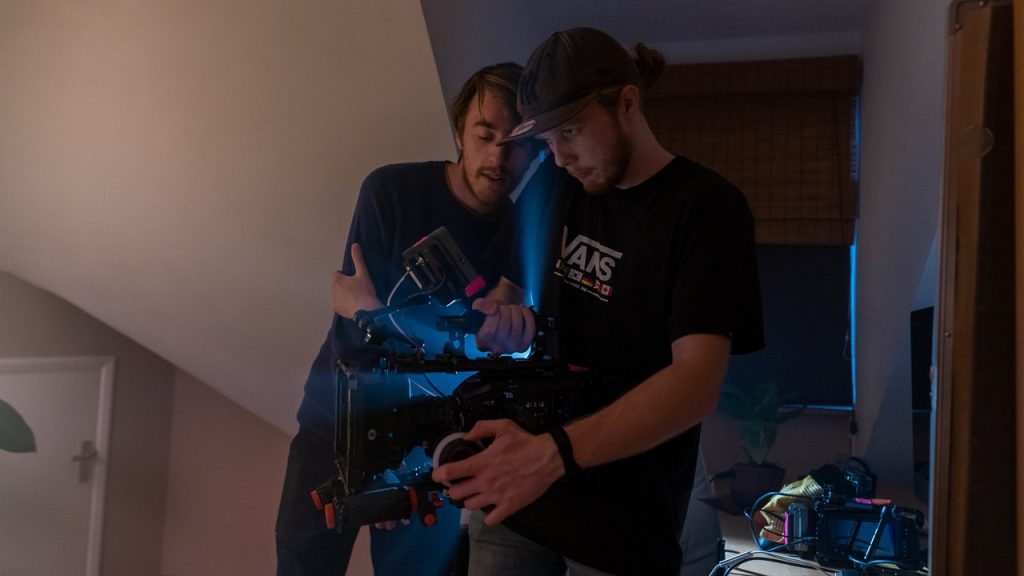
Gupta explained how resolving issues, especially disagreements between members of the team, is key to keeping the production rolling smoothly.
"Let’s say that your wardrobe person isn't happy with the art department since the colors don’t match what they discussed in pre-production. As a director/AD, you need to bring the departments together and find a creative solution to any issues on set."
Spending time resolving these issues also shows the cast and crew that you're invested in their work and in the project as a whole.
Motivation
Motivation is another key skill for directors and producers, but thankfully, it's also a trait that most aspiring filmmakers probably already have in spades.
It takes a great deal of motivation and effort to break into the highly-competitive entertainment field, and individuals hoping to lead productions in the future tend to have grand plans for the work they want to create.
The real challenge in this area is to maintain that sense of motivation and drive over time because it can take years to earn one of these roles.
You won't always be doing the kind of work you'd like to be doing, but every project is a chance to prove to your colleagues that you're serious about filmmaking and can execute tasks with professionalism every single time.
But what about when you finally step into a producing or a directing role? What about when you start getting gigs on a regular basis?
Well, we have some good news and some bad news on that front.
The bad news? Becoming a professional filmmaker doesn't mean that all your problems will magically go away. You'll still need to work hard every step of the way.
The good news is that truly dedicated filmmakers will always have enough motivation to overcome inherent filmmaking challenges, and that's certainly been the case for Gupta.

For Gupta, every project is an opportunity to do good work.
"A project can take two days, a week, or even months if you're working on a feature. I tend to take it one project at a time and give it my absolute best and my total commitment. That helps me stay positive and organized on set."
There will always be challenges, but if you can manage to stay motivated, you'll find ways to make it past every one of them.
Pre-production planning
What's next? The importance of pre-production, of course.
For aspiring directors and producers, this probably doesn't seem like the most exciting part of the process. All the excitement happens on the set, right?
Not really. As Gupta put it:
"Pre-production is everything. There is no production without the pre-production process."
Pre-production can be an extensive process where the team needs to work out exactly what the project is and what resources will be needed to actually get it made.
This phase of production can vary quite a bit from project to project, but as Gupta explains in this quote, pre-production tends to cover similar concerns and topics.
"It starts with an idea, then a screenplay, then budgeting the movie, choosing a good crew and cast, scheduling the movie according to the budget, and finally having a shot list to take on set."
In a more basic sense, this is the planning stage. Unexpected things are going to happen on set, which we'll talk about in the closing section, but pre-production is the time to cross as many Ts as possible so that everyone involved knows what they're getting into.
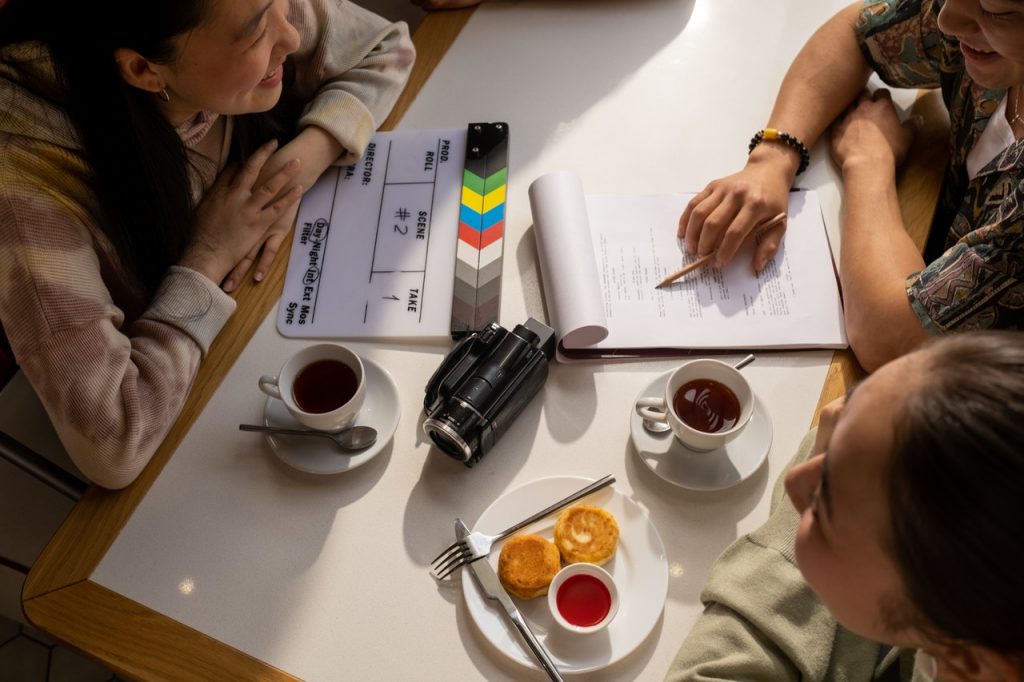
For directors, this is definitely the time to get to know the cast and get a sense for their performance capabilities.
Gupta:
"Running a lot of rehearsals with your actors and knowing your cast inside and out will help create better relationships and save time on set since the actors will already know what you want, and you'll know what the actors are going to deliver."
Again, this is the opportunity to cut down on the number of surprises you might encounter on the set. During production is definitely not the best time to run a scene a million times to get a taste for different line deliveries, blocking, etc. That's disrespectful to the cast and crew, it wastes time, and it also wastes lots of money.
Working out the budget is typically a bigger concern for a producer, or more specifically a line producer. This is yet another detail that needs to be nailed down during pre-production.
Especially for low-budget projects, setting and sticking to a budget is key, since the odds of finding additional funding are slim.
If there's a solid plan and timeline for production, then everyone, especially the producer, can rest easy knowing that the team has done as much as possible to avoid pitfalls during production.
Taking the dive
One day, maybe in just a few weeks or maybe a couple years from now, you're going to be working as a director or producer.
That's going to be an exciting moment, but it will also come with plenty of anxiety, too.
If we haven't stressed it enough already, staying calm is incredibly important, as Gupta mentions here.

"Be prepared for everything and don’t panic, no matter what happens. Things go wrong, but if you have a calm head, then you can always find a solution to any given problem."
Even with incredible pre-production planning, you'll hit some snags. Maybe one of the actors won't show up on time. Maybe there will be a problem with a location. The weather might be sub-optimal.
It's ok, take a deep breath. This is all part of the journey.
Gupta:
"If you're directing for the first time, you will make mistakes. It's part of the learning process. The key is to remain calm and have a positive attitude on your film set so that you build relationships and networks with people who may help you in the future."
We'll put it this way: you'll never have a dull project. There are always going to be challenges and unexpected problems, but the truly dedicated filmmaker is able to move through it all to realize their vision. If you're willing to work hard, that filmmaker could be you.