Interview with Writer, Director and Editor John-Michael Powell
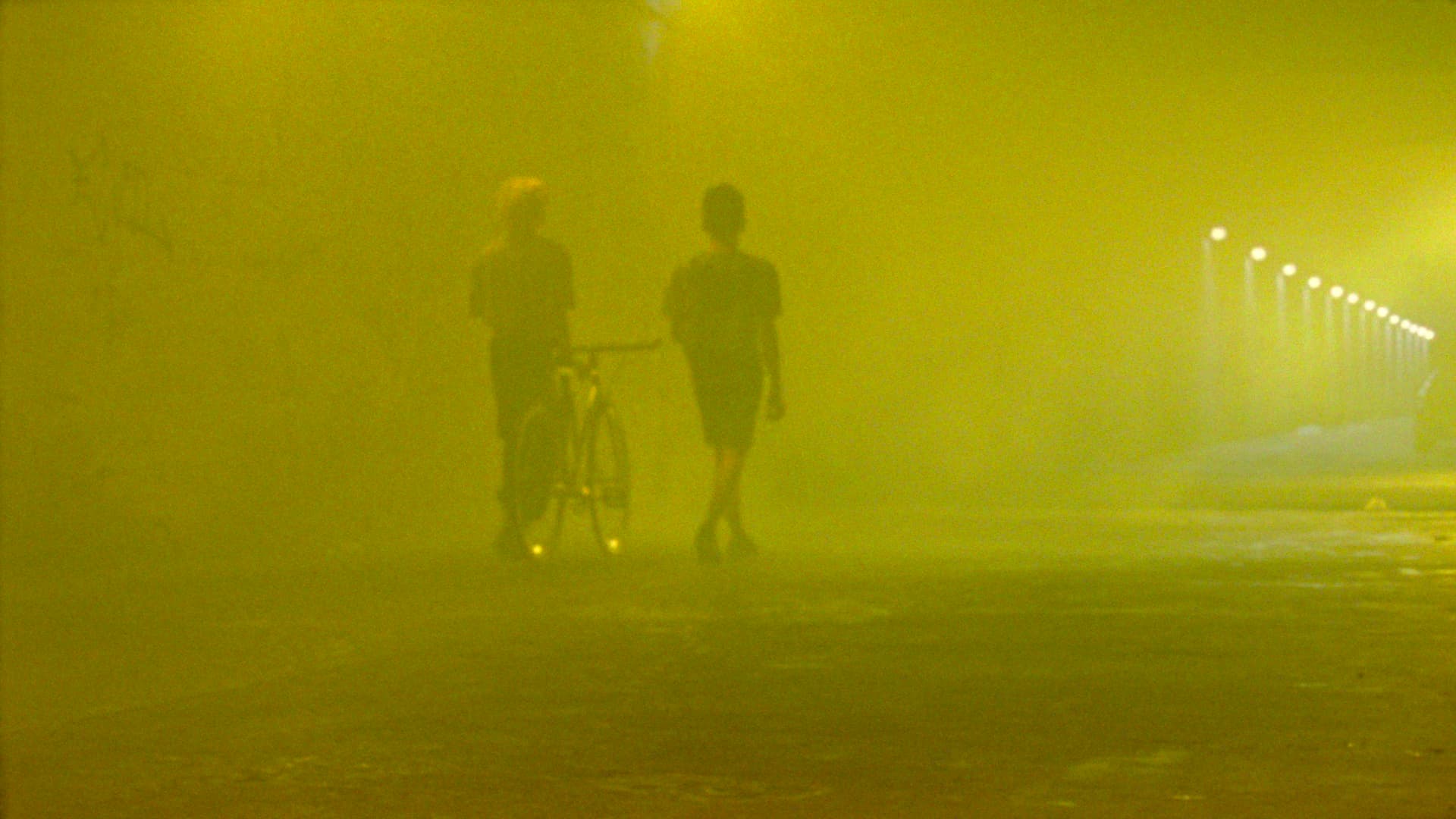
Above: Still from John-Michael Powell's directorial debut, The Send-Off
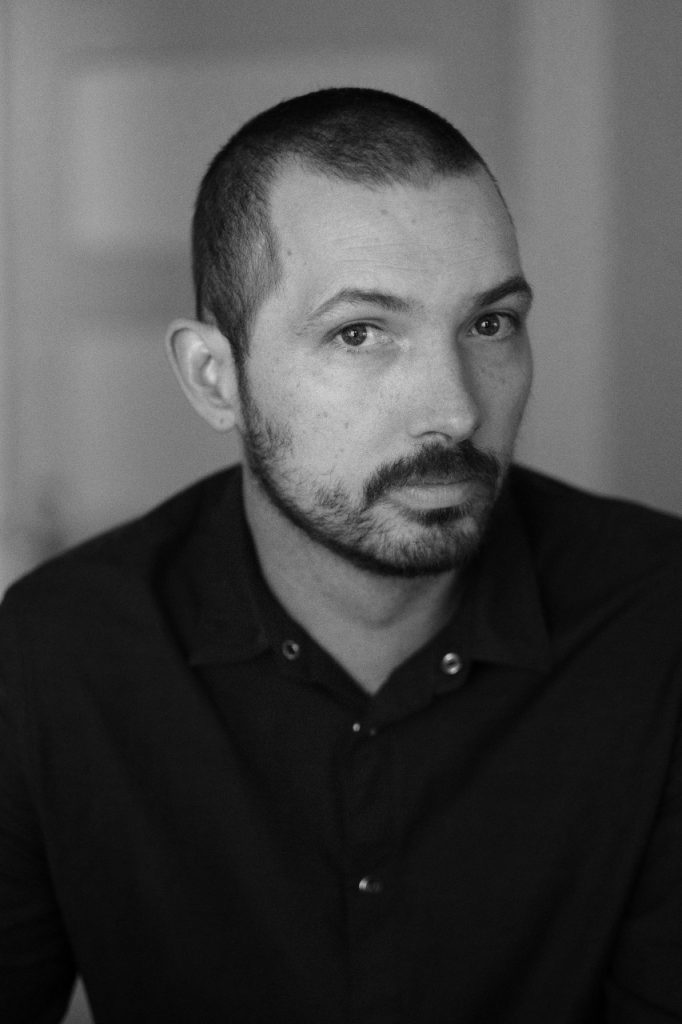
John-Michael Powell got his start in the entertainment industry during film school, when he became the go-to editor for his classmates’ student films. Since then, he has worked in television, film, shorts, and music videos, and is well known for his editing work on Netflix’s Dear White People, the feature comedy It Happened In LA, and All the Wilderness. John-Michael’s editing can also be seen in the 2021 American drama film Women is for Losers, from writer-director Lissette Feliciano.
As a director, John-Michael has just finished up work on his feature debut The Send-Off, premiering at the Cinequest Film Festival this month. We had the chance to speak with John-Michael about his start in the film world, his experiences working on Women is for Losers and his debut feature, and the process of editing and directing.
Tell us a bit about yourself. What was your first job in the entertainment industry? How did you decide to pursue editing and directing professionally?
I’m originally from Little Rock, Arkansas, and wasn’t one of those kids who grew up with a camera in my hand wanting to be Steven Spielberg. Though I was a voracious movie watcher, I really grew up painting and playing guitar. I honestly thought I was going to be a rock star.
I floated around rock bands in Little Rock and Dallas and did some touring in my early 20s, but ultimately ended up in a film program for college. That program had a film library and I signed up to be one of the librarians. It was so slow that I’d just sit there all day watching old laserdiscs and VHS dubs of foreign films. Like most film school students, my eyes were opened by French New Wave filmmaking and that’s when I knew I wanted to be a director. There was something invigorating, but also accessible in a lot of those films - especially Jean-Luc Godard and Louis Malle’s work.
But I didn’t jump into directing right away. Because I came from a music background, I had experience using Pro Tools. That experience made me the de facto editor at my program because I was the one who picked up Avid the quickest. I ended up cutting everyone’s student films and when I left the program, I figured I’d make a go at it.
I packed up my car, headed to Los Angeles, and sent my resume out until I found a job working as a night editor at a reality television company. About a year or two after that I responded to a craigslist post looking for an editor on a no-budget feature film. I cut that film, Obselidia, and it went on to win at Sundance and was nominated for a couple of Spirit Awards. That was twelve years ago and I’ve pretty much been going non-stop ever since.
You have worked both as an editor and a director. Can you discuss the similarities and differences in those roles? Was there something that surprised you about the process of directing compared to editing?
Well, the key similarity is that both directors and editors get very little sleep. That’s a joke, but also not a joke. I’d wager directors and editors consume at least 1/10th of the entire world’s coffee supply on any given day. That’s also a joke, but maybe true? I have no way of crunching those numbers.
The director and editor are uniquely similar in that both roles are really the only ones on a film that require you to think about the story holistically. By that, I mean that both are required to consider every aspect of the production when doing their job; cinematography, camera movement, performance, production design, sound, etc.
When you’re editing, it’s all about getting inside the audience’s shoes and feeling what they feel on a visual and auditory level, as well as an emotional level. On a film like Women is Losers, you’re thinking, “how do we get the audience to engage with Celina from the opening frame?” And then once you’ve got the audience hooked, it’s all about making them feel every moment of her journey emotionally. If I’m cutting a show like Dear White People, it’s about the musicality of the humor of that show. The storytelling is in the rhythm and the pace of how each character moves through that world. And every character in that show has a different rhythm and a different voice, so it becomes about understanding characters and their arcs, especially how to jump in and out of their perspectives. When you’re editing, every choice (cut) is made considering all those other production factors I mentioned. Still, an editor’s storytelling tools are finite and dependent on the footage in the can (hard drive).
As a director, you’re more like a Cerberus of storytelling, or King Ghidorah if you prefer the Godzilla franchise to Greek mythology. Those creatures have three heads, as does a director when it comes to storytelling. You’ve got the script phase, the shooting phase, and the edit phase. All three phases require different types of storytelling and what I wasn’t prepared for, coming from editing, was that you have to think about the story like a ship going across the ocean and you’re the captain. Because the journey is going to take months, maybe years, and you have to help guide the story in a slightly new direction every day without ever losing sight of the port you’re headed for. Or else you end up marooned on an island off the coast of Madagascar and you’re fighting pirates for the last bit of rations you have. Being a director can be insanely taxing in your problem-solving brain. You have to be prepared for the mental marathon and figure out how not to get lost in the weeds.
Can you tell us a bit about your experience editing the film “Women Is Losers” and how that process went?
The process of editing “Women Is Losers” was a bit different for me. I had met Lissette Feliciano, the director, when I was working on a film called It Happened in L.A. back in 2017. Lissette at the time was, I think, just out of college and her job was to deliver hard drives at the end of each day to my edit bay. We obviously would see each other every day and we struck up a bit of a friendship.
Fast forward to 2019 and she was editing her film Women is Losers and had a first cut, but needed a fresh perspective on it. She reached out to me quite out of the blue. It’s funny, I don’t know if I ever told Lissette this, but when I saw the cut for the first time I was considering passing on the project. I just didn’t see the easy path to elevate the cut immediately. I saw lots and lots of hard work that needed to be done and I just wasn’t sure I wanted to take that on. Thank goodness I showed the cut to my wife, Sabrina, because she immediately saw a great movie in that rough cut and convinced me to take it on.
The way I attacked that edit was that I kind of benchmarked the scenes I thought were working and set those aside, and then I took the scenes I thought were integral to the story that weren’t working and attacked those first. I started with performance and worked my way out from there. After those scenes were feeling good, I chopped all the fat. I can’t remember the run time of the first cut, but by the time I was finished with the edit, I think I cut something like fifteen minutes or so out of the film. It wasn’t a scene one re-cut, but it was a lot of structural work. Kind of like coming onto a construction site and they’ve already built the house, but it’s not exactly how the homeowner imagined, so you have to rebuild the house without destroying the foundation and work brick by brick, kind of pulling the ugly stuff like a big Jenga tower - hoping it won’t topple over on you. In the end, that’s one of the projects I’m most proud of. There’s a lot of creative elbow grease in there that’s very much me.
Your feature film, “The Send-Off”, recently wrapped production. What can you share about your experience directing your first feature film?
I’d say when you’re editing, you don’t really understand the way you have to train your brain to see the story over the course of an entire shooting schedule as a director. When you’re the director - you have to know the story so well that when you’re on day 8 and it’s scene 56 and the character is standing up to her boss and this choice she’s making is going to ripple throughout the rest of the story, you don't have to think about why she’s making the choice… oh and suddenly you and the director of photography make a decision to shoot this character’s close ups exclusively on a 40mm lens because that suddenly feels right for this beat… and at the same time your production designer warns you that her wardrobe pallet should maybe be red, not the yellow she’s wearing, because red is the color you’ve chosen to represent the character’s conflict arc… and then in the fifth take the actor ad libs a line that is actually brilliant, but changes the dynamics of scene 89, which you shoot next Tuesday, but that’s after you shoot the climax (because you’re shooting out of order), but you remember that you already changed a line in scene 10 that makes this line not work, but you’re an editor at heart and you realize in the moment that you can cut this scene a certain way and that won’t hurt scene 89 next Tuesday, or scene 10, or the climax - everything is fine because you know what this scene is about right now - it’s about the character rejecting the failures of her past and standing up to her own insecurities and if you just focus on that you’ll make the day… and if you make the day, you’ll make tomorrow and if you keep doing that enough times you’ll make a movie. And that’s pretty much what it feels like to direct. And it’s every second of every day of production. Even when you sleep, you dream the next day’s shot list.
It sounds crazy and impossible - but for me, it’s the most rewarding creative work I’ve ever been a part of. I love collaborating and being the director of a feature film. It’s kind of like being in a big band that’s playing a new stage every night and you’re all working together making micro-cosmic decisions that add up to make every day exciting and fresh.
What has your work taught you about yourself or life in general?
I suppose one of the benefits of my line of work is that you get to interface with so many different types of people. Every project brings a new set of faces you get to collaborate with and become friends with and see new perspectives. Working in this business is kind of like transferring colleges every semester.
With that in mind, you learn very quickly that there is no right way to do anything. And that nobody knows anything. We’re all just throwing ideas at a big wall and seeing what, not just sticks, but makes the most people in the room go - “wow, that’s cool.” And I think that’s true of everything in life, not just art. We like to think that there’s someone out there, some “genius” who knows what they’re doing, who’s spent their entire life educating themselves so they can solve these super complex puzzles that we can’t even begin to understand - economies, pandemics, Russo-Ukrainian nuclear holocaust scenarios - but the truth is that everyone’s guessing and checking. Nobody has the answers.
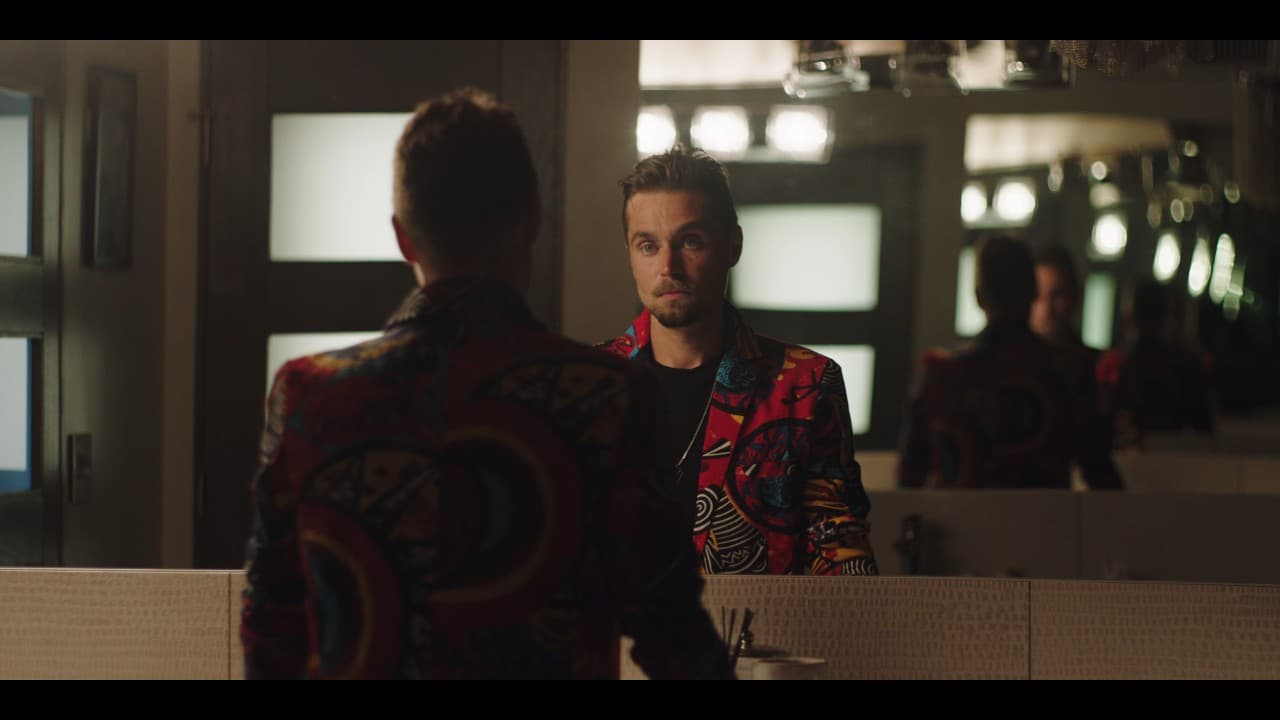
At the end of the day, we’re all ants floating through space on a rock just trying to make sense of time. That might be scary to some people, but to me, that’s what makes art and creativity so exciting. It’s about discovery. What can be more exciting than discovery? And if you see my film, The Send-Off, there’s a spine through the movie where the main character, Dan Richards, who is a celebrated actor, does an interview and talks about acting in big, pretentious, deeply psychological ways. I’m starting to feel as pretentious as Dan Richards right now.

Still from John-Michael Powell's directorial debut, The Send-Off
What is advice that you can give to aspiring editors or directors?
Do it. Put one foot in front of the other, look down at your toes, and go make things. Don’t look left or right. Just move forward. The second you doubt you’re going to do something is the moment you start to stagnate.
If you want to be an editor - edit. There are cost-effective NLEs out there that you can cut on for free. I think DaVinci Resolve is free these days. Download Resolve and start cutting. If you don’t have footage, shoot something with the phone in your pocket. Post it online and connect with other filmmakers you respect and want to work with. Most won’t respond, but if you write a hundred people online and say you want to work with them - I guarantee you one or two you’ll end up working with. At least three or four of the actors in my film I simply DM’d on Instagram and begged them to read my script. A lot ignored me, a few didn’t. Those few ended up in my film.
If you’re a director - same advice, just slightly modified to make stuff, share it and I’d highly recommend learning to edit yourself. It’s a massive tool in your belt to know the cut before you shoot.
And then my last bit of advice is to watch everything you can get your eyes on while staying a dilettante. You always want to be pliable enough as a creative that you’re able to break the rules. But bottom line - just keep making things.
Where can we find you on social media?
Quiet but growing louder on Instagram @johnmichael_powell. Also on Twitter @jm_powell.
-
Check out more of John-Michael Powell’s work on IMDb.