The State of Indie Filmmaking, Feat. René Guajardo
There was a time not that long ago when "indie" was still a relatively unknown term. Back then, independent filmmaking certainly existed, but it wasn't exactly part of the mainstream. Only film buffs and those regularly attending film festivals were well-acquainted with this kind of work.
These days, independent filmmaking, or indie filmmaking, is bigger than it's ever been. As long as the work shares something truly unique and compelling, there's no end to the success that these relatively low-budget projects can achieve.
Who better to share their perspective on the current state of indie filmmaking than an actual indie filmmaker?
René Guajardo has over twenty-five credits on various independent film projects, including quite a few directorial and screenwriting credits.
Growing up in his home country of Mexico, Guajardo and his friends made whatever kinds of movies they could from an early age, and as a young adult, Guajardo found other like-minded artists who went on to work together regularly.
In addition to his independent filmmaking work, Guajardo has also recently been working as a Production Assistant on major television shows, music videos, and commercials in Los Angeles, including work for Ted, The Orville, Amazon, Nike, Spotify, Billie Eilish, Travis Scott, Bruno Mars, and Doja Cat.
Guajardo talked about how this PA work has bled over into his indie work, but we'll get to that later. First, we'd like to cover some of Guajardo's general views on filmmaking today, especially indie filmmaking.
Evolving cinema
Guajardo believes strongly that cinema has evolved over the last several years, and that cinema evolves more or less continuously, as humans change their perspectives and priorities, which in turn influences the norms of artistic expression.
But if there's a single factor that has contributed in larger part to this evolution in recent years, it's technology.
"Cinema has undoubtedly evolved due to the immense and rapid growth of technological advances. Making a movie has never been as accessible as it is right now. Back in 2006, I started creating mini-movies with my friends. We used a webcam to shoot them. Nowadays, you can shoot full high-quality video on a small phone and, depending on how the video is shot and cut together, it could be a true film worth releasing to an audience."
One of the most famous high-profile examples of using relatively low-grade tech to create a successful movie is Tangerine, the Sean Baker film set in East Hollywood. It was shot entirely on iPhones.
As consumer tech continues to advance, there are simply more (and better) options than ever before for filmmakers to choose from, and for young and aspiring filmmakers, in particular, being able to choose from all these options means the world.
Of course, high-end professional cameras and equipment aren't going to disappear. The majority of professionals just about always choose this equipment if they can afford it. But the major advancement here is that, with the help of increasingly advanced consumer-grade tech, more people can create films, period.
That's great news, not just for young filmmakers but also for audiences who want to see a wide variety of work and hear from a wide variety of voices.
A filmmaking community
Filmmaking has always involved a communal, collaborative aspect. While film directors are often praised for their creative leadership, the execution of those ideas comes down to the rest of the production team.
In most cases, the collaboration starts long before the cameras start rolling, with creatives passing around different ideas and making suggestions along the way.
For Guajardo, even from the start, filmmaking has always been a highly collaborative activity, with different people switching roles from project to project, trying out as many ideas as possible. There was always a sense that everyone was trying to help each other tell their stories.
This approach remains consistent for Guajardo today as well, and he's made it a priority to find and build a filmmaking community where everyone benefits from creativity and collaboration.
"I try to surround myself with artists. I would say that my closest friends are filmmakers. Ideas for films undoubtedly come about when you are hanging out with storytellers all the time. I do have my circle of consistent collaborators, but I’m always working with new people and believe in finding new collaborators and expanding the source of creativity behind my projects."
With a sense of community, it's not about one person sticking to their own ideas and their own ego, but rather creating spaces where ideas can come together and improve.

René Guajardo
Learning from other productions
Returning to Guajardo's PA work with major studios, some might have the misconception that the world of big-budget filmmaking and the world of indie filmmaking are entirely separate. But for many production professionals, that's not really the case.
Guajardo is proof of that. Not only has he worked on both sides, but he's also found ways to carry experiences and expertise from one setting to the other, and vice versa.
Also, in many ways, independent and big-budget filmmaking aren't actually as different as you might expect. Most importantly, they both need to combine artistry and practicality.
"Through my PA work, I learn a lot of things about production and everything that's needed for the movie to happen. It’s harder to work on personal artistic projects when you work for big companies, but I always find the time. I’m currently in pre-production for a new short film. I’ve been learning a lot for the past few years about the craft of filmmaking and now I’m learning about the business side of it."
The budgets might be different, but both types of productions have to find a balance that will allow the original creative vision to shine through without going so far into that creative core that the film risks losing touch with the vast majority of audiences.
Guajardo clearly values the way in which his PA work has given him a new perspective on filmmaking, one that applies to all types of productions.
Taking the leap
It's difficult to talk about the arts these days without addressing the socially distanced elephant in the room.
Creative professionals had their careers seriously impacted by the effects of the pandemic. For many, it just wasn't possible to continue their work at all.
Fortunately, both major productions and indie productions did find ways to continue safely, but there was also a psychological side to the pandemic.
On the one hand, the pandemic caused many to retreat inwards, having less interaction with the outside world, which of course limited collaboration in many ways.
But there was a positive side to this collective moment of introspection as well. For some, Guajardo included, it served as a reminder of the passion and enthusiasm they felt for creative work. For others, it gave them the motivation to finally take the leap and start doing some filmmaking of their own.
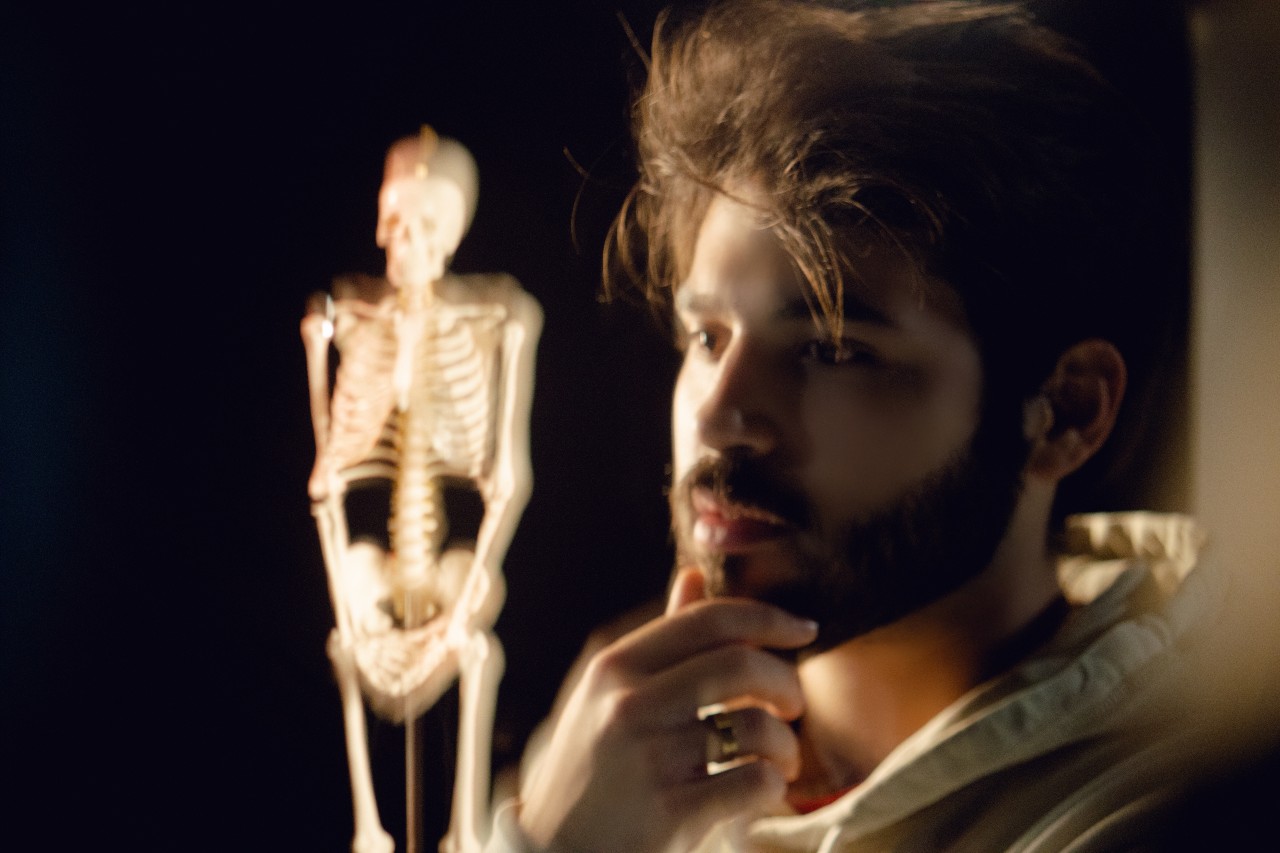
"I would say that the pandemic opened our eyes to reality and put things in perspective. I think that the pandemic motivated people to pursue their dreams. For the first time ever, a lot of people realized we truly should do whatever we want with our lives because we just can't afford to not follow our dreams. There isn't any time to waste."
We saw this in action during the height of the pandemic, with many people finding ways to create from home or via online collaborations, and we're still seeing the effects today.
More people are willing to take the risks necessary to create and share their work with the world.
Advice for indie filmmakers
With all that said, maybe some of our readers are also now feeling motivated enough to buckle down and get involved in filmmaking.
Obviously, that doesn't mean you need to fly out here to LA and start looking for jobs at big studios. You can start making films from just about anywhere, with basically any gear you happen to already have.
But regardless of the specifics, Guajardo stressed that maintaining motivation and commitment to the work is absolutely essential for anyone who wants to get serious about filmmaking, especially for anyone working on the indie side.
It's not something that you'll be incredible at right away. It takes time and effort and collaboration to make a film really shine.
"What I can say about indie filmmaking is that you need to have a real passion for it. It’s key to keep working on your craft by making films and getting involved with multiple productions. Grow your network and meet filmmakers. Watch movies and analyze the reasoning behind your artistic choices. Keep writing and work hard on making your script into a real movie."
For those who are truly prepared to dedicate themselves to filmmaking, the opportunities are out there. But it all starts with the first few tiny steps. From there, it's really up to you to make it all happen.